

One in every five Americans will be diagnosed with some form of skin cancer in their lifetime – but that’s not the only reason why you should visit The Derm for regular skin exams.
Yes, skin cancer and other skin conditions can often be prevented or treated successfully if they are detected early through self-exams or professional skin exams. But the key is to become as familiar as possible with your skin, so you’re aware when any changes occur.
Keep reading to learn the benefits of regular skin exams, what to expect during a professional skin exam, how to do an effective skin exam at home, and when you should visit a dermatologist.
What are skin exams?
The skin care experts at The Derm recommend seeing a dermatologist for a full-body skin exam once a year – and possibly more frequently if you are at a higher risk of skin cancer.
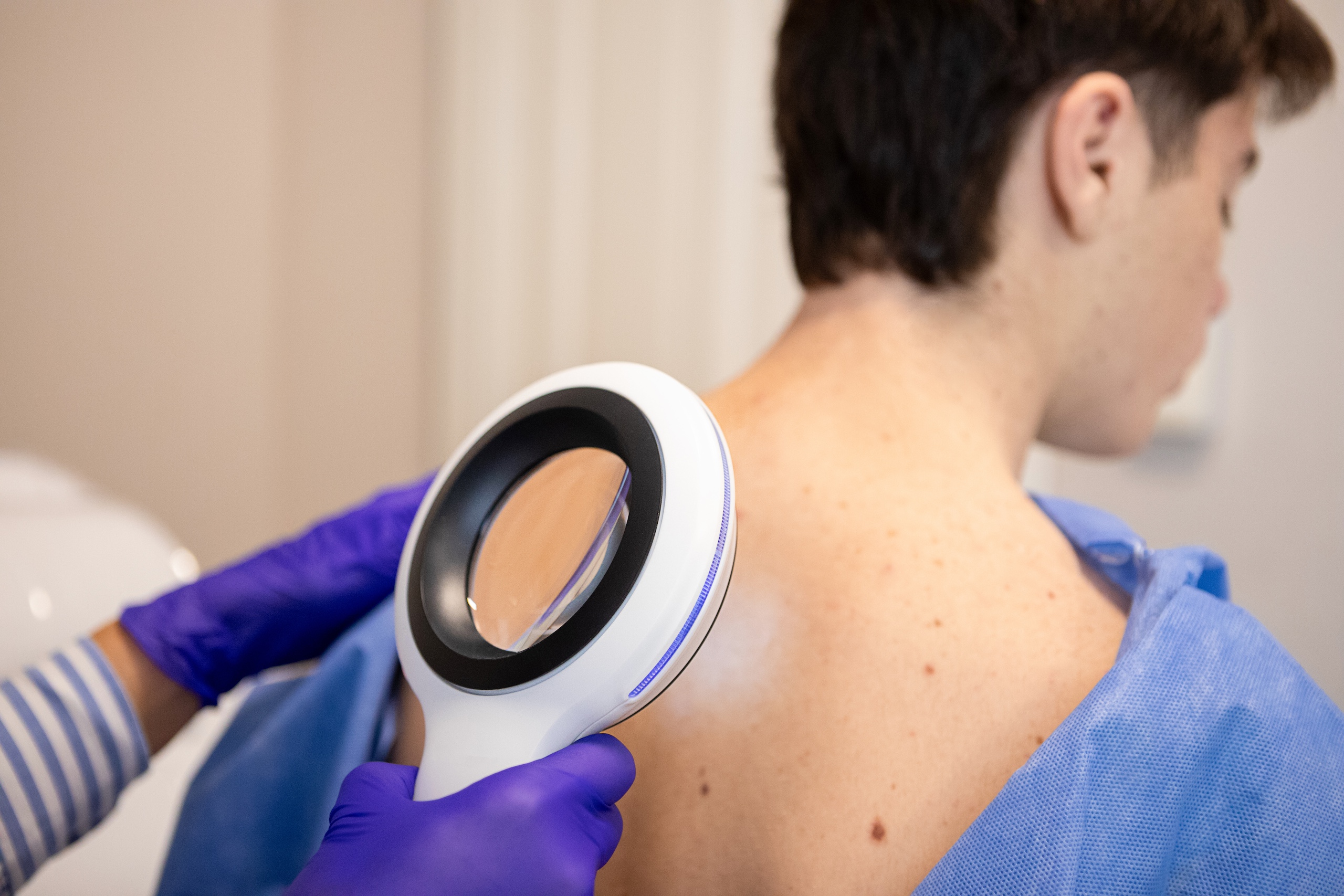
A professional skin exam is when a dermatologist completes a head-to-toe visual inspection of your skin, including your scalp, face, mouth, fingers, and toes. During the exam, your dermatologist looks for any early signs of skin cancer and other skin conditions, such as eczema or psoriasis. The dermatologist also looks for signs of viral or bacterial infection, including warts or rashes.
A self-exam is when you check your own skin for any new or changing moles or other growths. Ideally, you should perform self-exams at least once a month based on your skin cancer risk.
The benefits of regular skin exams
Following these guidelines for regular skin exams has many benefits, including:
Early detection of skin cancer
Changes in your moles or skin are often early signs of skin cancer, when the disease is most treatable. In fact, when detected early, the 5-year survival rate for melanoma – the deadliest form of skin cancer – is 99%. Basal cell carcinoma and squamous cell carcinoma, the most common types of skin cancer, are also highly treatable if caught in the early stages.
Monitoring changes on your skin over time
It’s much harder to detect skin changes when you don’t have anything to compare them to. With regular skin exams, you and your dermatologist can closely monitor any suspicious changes in size, shape, color, or symptoms like itching or bleeding. These changes may require additional care if they progress.
Professional guidance on skin health and sun safety
Regular skin exams give you the opportunity to ask questions and discuss any skin concerns you have. Together, we can create a customized treatment plan just for you. Sun exposure is a major risk factor for skin cancer, so we can also suggest ways to protect your skin from the sun’s harmful UV rays – from SPF skin care products to sunburn prevention tips.
What to expect during a skin exam
To prepare for the exam, remove any makeup from your face and body and any nail polish from your fingers and toes. Wear your hair loose so the dermatologist can examine your scalp – no ponytails or buns. If you have any photos or notes about new or changing growths on your skin, please bring them.
You will be asked to remove your clothing and put on a medical gown. It’s unlikely that you will have to remove your underwear unless you have a spot on your genitalia that concerns you.
Your dermatologist will then thoroughly examine your skin, paying close attention to hard-to-see spots like behind your ears and between your fingers and toes. The dermatologist may use a handheld magnifying device called a dermatoscope to examine certain areas more closely.
If anything unusual is found, your dermatologist will perform a biopsy – a quick procedure that removes part or all of the skin growth in question, which is sent to a lab for further analysis.
Tips for at-home skin exams
Here are some ways to make your self-exams more effective:
- Perform the exam in a well-lit room, using a full-length mirror and a handheld mirror.
- Ask a partner to help you examine hard-to-see spots.
- Watch for the ABCDEs of melanoma (Asymmetry, Border, Color, Diameter, Evolving) and take note of any concerning areas.
- Keep a photo log of any new or changing moles or other growths.
When to see a dermatologist
In addition to your yearly skin exam, contact a dermatologist ASAP if you have a mole or other growth that:
- Changes in size, shape, or color
- Is asymmetrical (one half doesn’t match the other half)
- Has an irregular border
- Is larger than a pencil eraser
- Itches or bleeds
Schedule your skin exam today
The board-certified dermatologists at The Derm are ready to perform your yearly skin exam, so your skin stays as healthy and safe as possible. Take the next step now – schedule your skin exam at our Glenview or Park Ridge office today.