

Skin cancer develops slowly over time, often after decades of damage caused by exposure to UV rays. But despite increased awareness, skin cancer remains the most common type of cancer in the United States. In fact, more people are diagnosed with skin cancer each year than all other cancers combined.
1 in 5.
That’s how many Americans will develop skin cancer by age 70. While statistics like these are alarming, the numbers might not mean much until they hit home. When you or someone you care about is diagnosed with skin cancer, statistics can suddenly get very personal.
The skin care experts at The Derm are sharing skin cancer statistics that everyone should know, so you can keep your skin as healthy as possible and reduce your risk.
All three main types of skin cancer are on the rise
Basal cell carcinoma, squamous cell carcinoma, and melanoma – the three most common forms of skin cancer – make up approximately 95% of all diagnoses in the United States. This year alone, there will be an estimated 3.6 million cases of basal cell carcinoma, 1.8 million cases of squamous cell carcinoma, and 200,000+ cases of melanoma, the deadliest form of skin cancer.
Basal cell carcinoma
Basal cell carcinoma is the most common cancer in the United States and around the world. Fortunately, this form of skin cancer is highly treatable.
Basal cells are found at the base of the epidermis, the outermost layer of your skin where new skin cells grow. Like most skin cancers, basal cell carcinoma is typically caused by exposure to UV rays. Patients who undergo radiation therapy for other cancers may also develop basal cell carcinoma at the site where radiation was given.
Basal cell carcinoma can cause flat scar-like areas, red, itchy patches, and other spots that don’t heal. These commonly appear on heavily sun-exposed areas, such as your face, neck, and arms. Basal cell carcinoma is slow-growing and rarely spreads, but it can invade underlying tissues if left untreated.
Squamous cell carcinoma
Squamous cell carcinoma originates in your squamous cells, which make up most of your epidermis. Also caused by repeated UV exposure or radiation, squamous cell carcinoma can grow more rapidly than basal cell carcinoma and is also more likely to metastasize.
Squamous cell carcinoma often develops from actinic keratoses, which are rough, scaly patches of skin often found on body areas that get more sun exposure, including your face or scalp. Larger squamous cell carcinomas around the head and neck (including the ears, eyelids, and lips) are more likely to spread.
Melanoma
Melanoma is less common than basal cell carcinoma or squamous cell carcinoma, but it is also far more dangerous. Melanoma begins in your melanocytes, the cells that make melanin and give your skin its color. These cells can mutate and multiply aggressively, often triggered by damage caused by UV exposure.
Melanoma usually appears as an existing mole or a new unusual spot that begins to change color, size, or shape. Keep reading to learn why any signs of melanoma require urgent medical attention.
Melanoma by the numbers
While melanoma accounts for only 3% of skin cancer cases, it has the highest death rate and is far more likely to metastasize to other areas of the body. Over the past decade, the number of new invasive melanoma cases diagnosed annually has increased by 44%.
Today, melanoma is one of the most frequently occurring cancers in young adults from ages 20 to 30, due to sun exposure during childhood, sunbathing, and indoor tanning bed use. Having five or more sunburns doubles your risk for melanoma, so past sunburns may be a factor as well.
The key to surviving melanoma is early detection. For melanoma that is still confined to the top layer of your skin and has not spread to your lymph nodes, the five-year survival rate is nearly 100%. If melanoma has spread to your lymph nodes or nearby skin, the five-year survival rate falls to 60-70%. For melanoma that has metastasized to other organs, the five-year survival rate plummets to 15-35%.
Of the 200,000+ melanoma cases in the United States each year, approximately 9,000 of these patients will die – making yearly skin cancer checks at The Derm a potentially life-saving practice. Visit a dermatologist right away if you have new or changing moles or spots that fit any of these ABCDE signs:
-
- Asymmetry (uneven halves)
- Border irregularity (jagged edges)
- Color variation (uneven shades)
- Diameter (larger than a pencil eraser)
Evolving (changing size, shape, color or new symptoms)
The screening stats
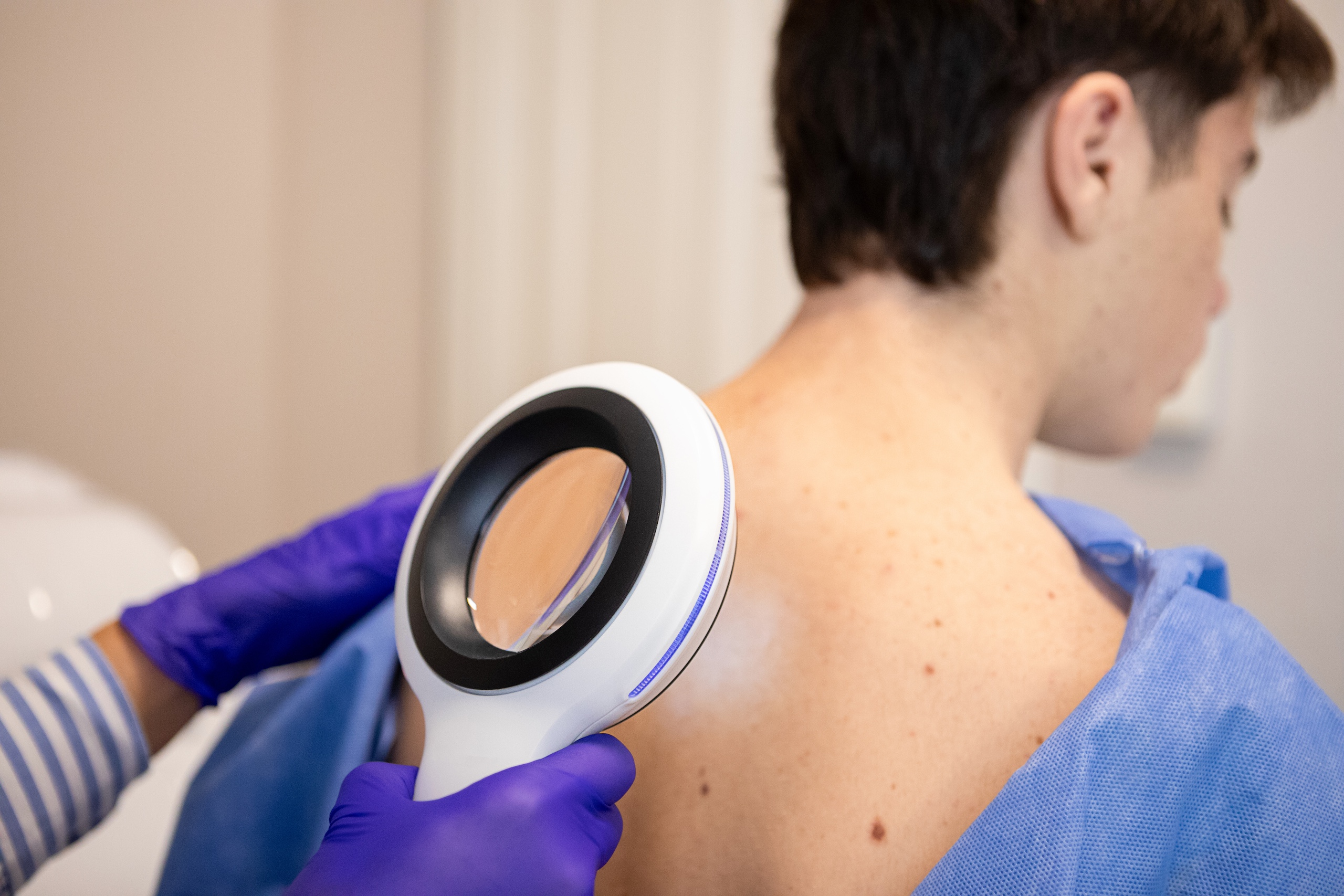
Regular skin checks are highly effective for early skin cancer detection. We also encourage patients to perform monthly self-exams, so they can report any concerns to their dermatologist.
The benefits of regular skin checks include:
-
- Finding skin cancers when they are smallest and easiest to treat
- Boosting five-year survival rates significantly (up to nearly 99%)
- Examining all body areas, including hidden spots that patients often miss like the scalp, back, behind the ears, and between fingers and toes
- Identifying and monitoring existing UV damage
- Providing guidance on sun protection and skin care products
Yearly skin checks are recommended for all adults over age 20. However, high-risk patients with the following conditions may need screening every 3-6 months to be fully protected:
-
- Personal or family history of melanoma or other skin cancers
- Fair skin
- Light-colored hair or eyes
- History of severe sunburns
- Frequent tanning bed use
- Large amount of moles (50+)
- Unusual moles or spots
Why so often? Because people often overlook skin cancer signs on their own, such as:
-
- Sores that don’t heal
- Shiny bumps
- Rough or scaly patches
- Persistent itching or tenderness
- Spots under your fingernails or toenails
- Changes on your scalp, back, and other hard-to-see areas
Studies show that up to 70% of patients don’t perform skin self-exams at all, making professional exams by a dermatologist even more critical.
What these stats mean for you
With an estimated 9,500 people in the United States diagnosed with skin cancer every day, it’s our hope that these statistics change how you prioritize skin health and sun safety now and in the future.
Here are a few “non-negotiable” facts to remember:
-
- Yearly skin checks are recommended for all adults over the age of 20, with more frequent checks for those who have higher risk factors for skin cancer.
- Always consult a dermatologist if you notice new or changing moles or unusual spots anywhere on your body.
- Seek treatment at the very first sign of melanoma, using the ABCDE guidelines above.
- Early detection has a significant impact on survival rates for skin cancer.
- You can’t change past sun exposure, but you can prevent additional UV damage by wearing broad-spectrum sunscreen with an SPF of 30 or higher. Ask your dermatologist for specific recommendations.
Schedule an appointment at The Derm today
Don’t become a skin cancer statistic! The board-certified dermatologists at The Derm perform comprehensive skin exams, address any suspicious areas, monitor your skin for changes, and share prevention tips to help keep your skin healthy.
To learn more, schedule an appointment at our Glenview or Park Ridge office today.